

I’ve seen multiple posts over the past few weeks arguing that capitalism is the problem, that we need to move to socialism to save ourselves and the planet. I understand the impulse. When you watch wealth concentrate while ecosystems collapse, when billionaires launch themselves into space while communities lack clean water, the system itself seems like the obvious culprit.
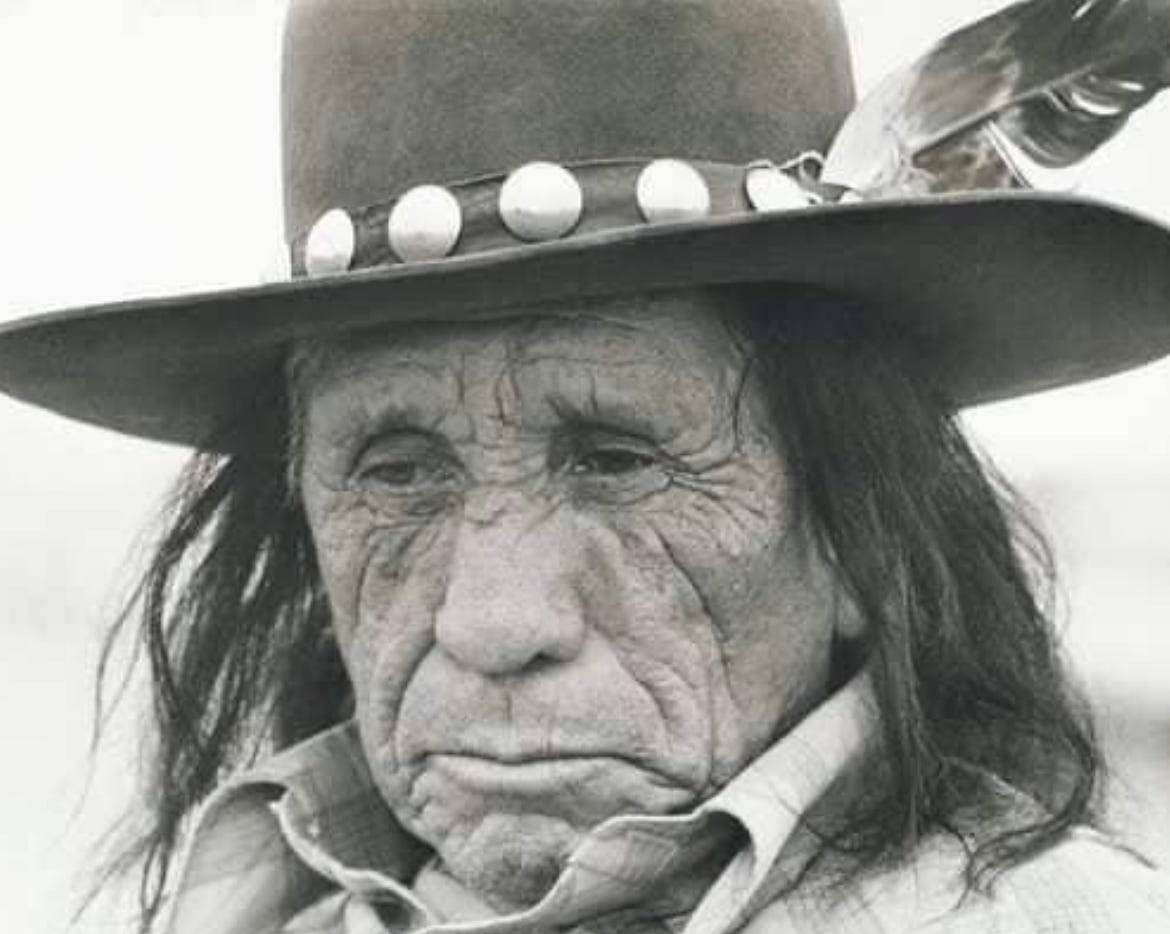
The other day, I encountered this quote from John Fire Lame Deer while researching Indigenous perspectives on pleonexia:
“If this earth should ever be destroyed, it will be by desire, by the lust of pleasure and self-gratification, by greed of the green frog skin, by people who are mindful of their own self, forgetting about the wants of others.” — John Fire Lame Deer, Lame Deer, Seeker of Visions (1972)
“Green frog skin” is his metaphor for paper money, which he ties to the pursuit of wealth that corrupts and destroys. And reading it, my thoughts returned to how we’re diagnosing the disease.
The Machinery I Helped Turn
I know something about serving “green frog skin.” I spent years in corporate hospitality, watching my efforts flow toward executive compensation packages and shareholder returns while those at the top posted their extravagant lifestyles across social media. I didn’t chase wealth myself. But I was complicit in the machinery. I helped turn the gears.
That wasn’t capitalism forcing my hand. That was me choosing a paycheck without asking the harder questions. The system provided the structure, and I provided the labor.
Lame Deer understood something we keep forgetting: the destruction doesn’t come from external systems but from internal failures. From the desire and lust for pleasure, prioritizing immediate gratification over long-term wisdom. From greed, the insatiable pursuit of wealth. From self-centeredness, being mindful only of ourselves while forgetting the wants and needs of others.
This reflects a fundamental difference between Indigenous worldviews and modern culture, whether capitalist or socialist. From Lame Deer’s Lakota perspective, the Earth and all living things are interconnected relatives that must be honored and cared for. The destructive force he warns against is the mindset that treats the Earth as something to exploit for personal gain rather than a sacred relationship to nurture.
That mindset doesn’t care what economic system you build around it.
The Pattern Plato Saw
Two thousand years before Lame Deer, Plato observed the same pattern. In examining different political and economic systems across Greek city-states, he saw that pleonexia (the insatiable desire for more than one’s share) corrupted them all. Democracy, oligarchy, tyranny, it didn’t matter. The faces changed, the structures changed, but the greed remained.
We’re still watching this play out. Venezuelan officials accumulated massive wealth while preaching Bolivarian socialism. Chinese Communist Party officials became billionaires within a nominally socialist state. Silicon Valley tech founders preach disruption while building monopolies. Oil-rich autocracies concentrate wealth regardless of their stated ideology.
I’ve written before about how Aristotle saw the greatest crimes stemming from unlimited desire, not necessity, and how modern pleonexia manifests in compensation packages that transcend any reasonable measure of contribution. The pattern holds across time and culture.
What corrupts systems isn’t their design but the people operating within them. The wealthy and powerful corrupt and capture whatever structure exists, whether economic, political, or judicial. Moving from capitalism to socialism doesn’t solve this. The same forces that corrupted the old system will corrupt the new one because the corruption lives in human hearts, not institutional frameworks.
The Spiritual Diagnosis We’re Avoiding
Lame Deer’s warning goes deeper than political economy. He’s offering a spiritual diagnosis: if humanity destroys the Earth, it will be through desire, lust, greed, and self-centeredness. These aren’t flaws in market mechanisms. They’re failures of human character.
From his Lakota perspective, this represents a severing of sacred relationships. When we treat creation as dead matter to exploit rather than as living relatives to honor, we’ve already chosen destruction. When we measure worth in accumulated “green frog skin” rather than in maintained balance, we forget our obligations to others and to the Earth itself. We’ve lost what matters.
This appears across wisdom traditions, as I explored in my essay on Aristotle and pleonexia. Buddhism names it as tanha (craving). Hinduism points to rāga (attachment) and forgetting of dharma. Islam identifies fasad (corruption) stemming from moral arrogance and forgetting divine accountability. Indigenous traditions see it as imbalance, the illusion of separation from land, community, and spirit.
The common thread: unlimited desire must be actively countered through spiritual transformation, moral formation, and cultural practice. It doesn’t happen through structural reform alone.
The Harder Work
System change is easier than heart change. That’s why it’s popular on Substack and in political discourse generally. We can debate policies and propose regulations, or advocate for different economic structures. These are concrete, achievable, discussable.
But Lame Deer, writing in 1972 with a forewarning about environmental destruction driven by consumerism and greed, and Plato, observing political systems 2,400 years ago, are both pointing to something harder: the transformation of human desire itself.
What would it mean to actually cultivate communities where “enough” exists as a meaningful category? Where accumulation beyond need is recognized as pathology rather than achievement? Where the Earth and other beings are treated as relatives rather than resources?
That work doesn’t fit in election cycles. Nor does it promise quarterly returns. It can’t be implemented through policy alone. It requires moral and civic education across generations. It demands leaders who embody the virtues they ask of others. It needs cultural narratives that celebrate moderation and relationship over accumulation and dominance.
This is the work that wisdom traditions across cultures have recognized as necessary. And it’s the work we keep avoiding by reaching for easier solutions.
I’m not saying we shouldn’t reform economic systems or address wealth concentration. We should. But if we think swapping capitalism for socialism solves the problem Lame Deer identified, we’re fooling ourselves. The “green frog skin” will simply find new pockets to fill, new systems to corrupt, new justifications for excess.
The question isn’t which economic system we choose. The question is whether we’re willing to do the actual work of transforming desire and cultivating moderation, of remembering our relationships to each other and to the Earth.
That work doesn’t trend. But it’s the only work that matters.
Thanks for reading. If you want more essays exploring philosophy and theology across traditions, subscribe to Terra Philosophica.
I’m also curious: What does your tradition teach about transforming desire? How do you practice “enough” in a culture that never stops demanding more? Leave a comment. I read them all.